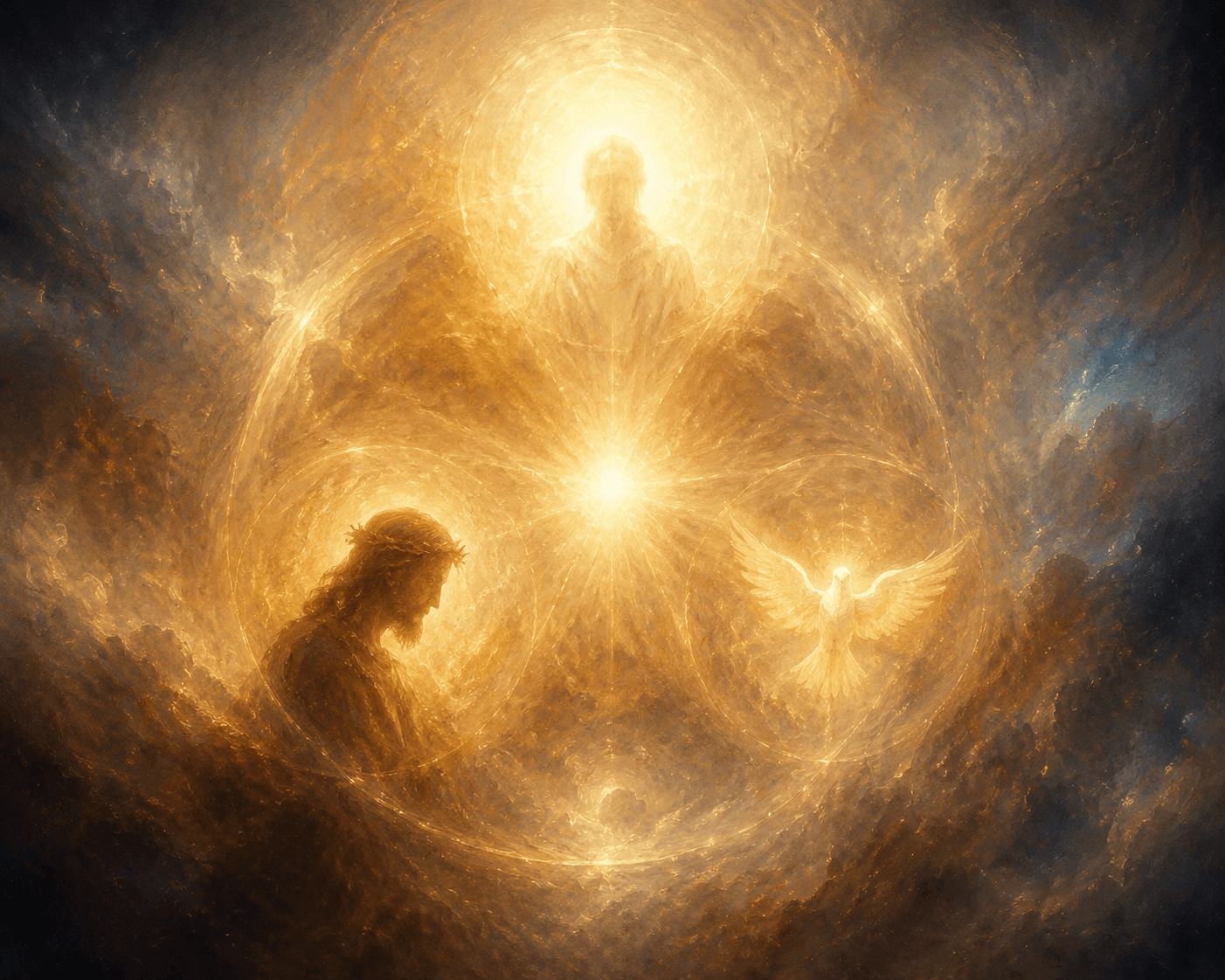
“God is love, and he who abides in love abides in God, and God abides in him”
This one sentence sums up the whole of Christian theology and the radical revolution that the incarnation brought to our understanding of God and of ourselves.
Through Jesus, “we have come to know and to believe in the love God has for us”.
Watch
If you prefer to watch then explore this section. If you prefer to read then scroll down.
Catholic Bishop BRILLIANTLY Explains God’s CRAZY Love for You
A short clip on the sheer scale of the love God has for each individual person.
‘God Is Love’: What 1 John Really Means | Dr. Brant Pitre
What St John is actually claiming about God in the verse this page opens with, and how the Cross reveals it.
St. Thomas Aquinas on Love in the Incarnation of God w/ Fr. Gregory Pine, OP & Fr. Andrew Hofer, OP
Two Dominicans in conversation on what Aquinas saw in the love that brought God into human flesh.
Love is Not a Feeling - Radical & Relevant - Matthew
A short Gospel reflection on why love is a decision rather than a mood.
Love in the Trinity
What makes Christianity unique is the doctrine of the Trinity, which reveals that “the God of faith is basically defined by the category of relationship” (Pope Benedict XVI). Through this lens, the intelligent power that created and sustains all things is understood not as a distant force, but as an eternal exchange of love overflowing into creation.
God’s relationship of love between the Father, Son, and Holy Spirit then invites humanity to participate in this divine communion. Before the coming of Jesus Christ, we couldn’t have known this about God. We can see his goodness, beauty, supreme intelligence and power when we observe the created world and all living things. But we can’t know about the love of God without the divine revelation which Christ gave us.
“A great mystery, a mystery of love, an ineffable mystery, before which words must give way to the silence of wonder and worship. A divine mystery that challenges and involves us, because a share in the Trinitarian life was given to us through grace, through the redemptive Incarnation of the Word and the gift of the Holy Spirit.”
“When One of the Three Persons communicates with a soul, by the power of that one will, it finds itself united with the Three Persons and is inundated in the happiness flowing from the Most Holy Trinity, the same happiness that nourishes the saints. This same happiness that streams from the Most Holy Trinity makes all creation happy; from it springs that life which vivifies and bestows all life which takes its beginning from him.”
Love in the Incarnation
The Incarnation is when God the Son became human in Jesus Christ. God willingly limited himself to share in the vulnerability and suffering of the humanity that he created and loved. He did this to restore the relationship between us that had been broken by sin.
St Athanasius
St Athanasius taught that God became man purely out of the love and goodness of the Father to rescue human beings from corruption and death. He famously summarised that “God became man, that man might become God,” meaning the Incarnation lifts human nature into a direct sharing of divine life.St Francis of Assisi
St Francis of Assisi was deeply moved by the poverty, littleness, and defenceless humility of God coming to us as a tiny baby in Bethlehem. His creation of the first live nativity scene was designed to let ordinary people physically experience the tender, approachable love of an incarnate God.
The radical generosity of the incarnation acts to inspire us to love God in return.
By living a fully human life, Christ demonstrated what love looks like in action—compassion for the outcast, forgiveness of enemies, and sacrificial service. By the way he lived, he showed us how to live in a way that will help us to find joy, whatever the circumstances of our lives. By calling us into a relationship with him, he can help us to live like this. As Pope Benedict XVI wrote, to be a Christian is “not the result of an ethical choice or a lofty idea”. It is instead, “the encounter with an event, a person, which gives life a new horizon and decisive direction.” (Deus caritas est).
Love in the Moral Life
St Francis often cried out in exasperation with the world “Love is not loved!” Every law, dogma, and virtue finds its true meaning and vitality only when animated by love. Love is the ultimate source, norm, and goal of all moral life, theological understanding, and spiritual practice.
But what actually is love?
An act of the will
So love is an act of the will whereby a decision is made. While affectionate feelings often accompany love, feelings are passive and fluctuating and so unreliable. Willing the good grounds love in the intellect and will so that the choice can be sustained regardless of emotional states.Which is why we can love an enemy
Because it relies on a decision rather than a mood, this form of love enables the command to “love your enemies.” You may not have positive feelings toward an enemy or someone who has hurt you, but you can actively choose their genuine well-being above even strongly negative emotions.What is “the good” that we are to will?
Willing the good is not simply giving people whatever they want, but desiring what truly leads to their flourishing, virtue, and ultimate fulfilment. The ultimate good of any person is union with God (salvation). Therefore, willing someone’s good means desiring their spiritual, moral, and human growth, even if it requires hard truths or personal sacrifice.The gift of self
Pope John Paul II expanded the classical definition so that willing another’s good naturally moves a person from well-wishing to action. True love then culminates in the gift of self: offering one’s time, energy, and even life to bring about that good for the one who is loved. In this way it is truly reflective of the love of Christ for us.
Love in the Eucharist
Because the Cross is the ultimate act of Christ willing the good of humanity - offering His life for our redemption - the Eucharist is the continual outpouring of that same sacrificial love into every generation.
Love inherently seeks to be close to the beloved. In the Catholic understanding of Transubstantiation, Christ does not merely leave a symbol or a memory; He makes Himself substantially present - Body, Blood, Soul, and Divinity. Through the Eucharist, Christ fulfils His promise to be “With you always”. It is an act of humble love where God hides His glory under the appearances of simple bread and wine to remain physically accessible to believers. Whereas in natural eating, food is converted into the human body, in Holy Communion, the reverse happens: the consumer is transformed into Christ. The Eucharist transforms believers to share in God’s nature, love, and holiness.
“The proper effect of the Eucharist is the transformation of man into God”